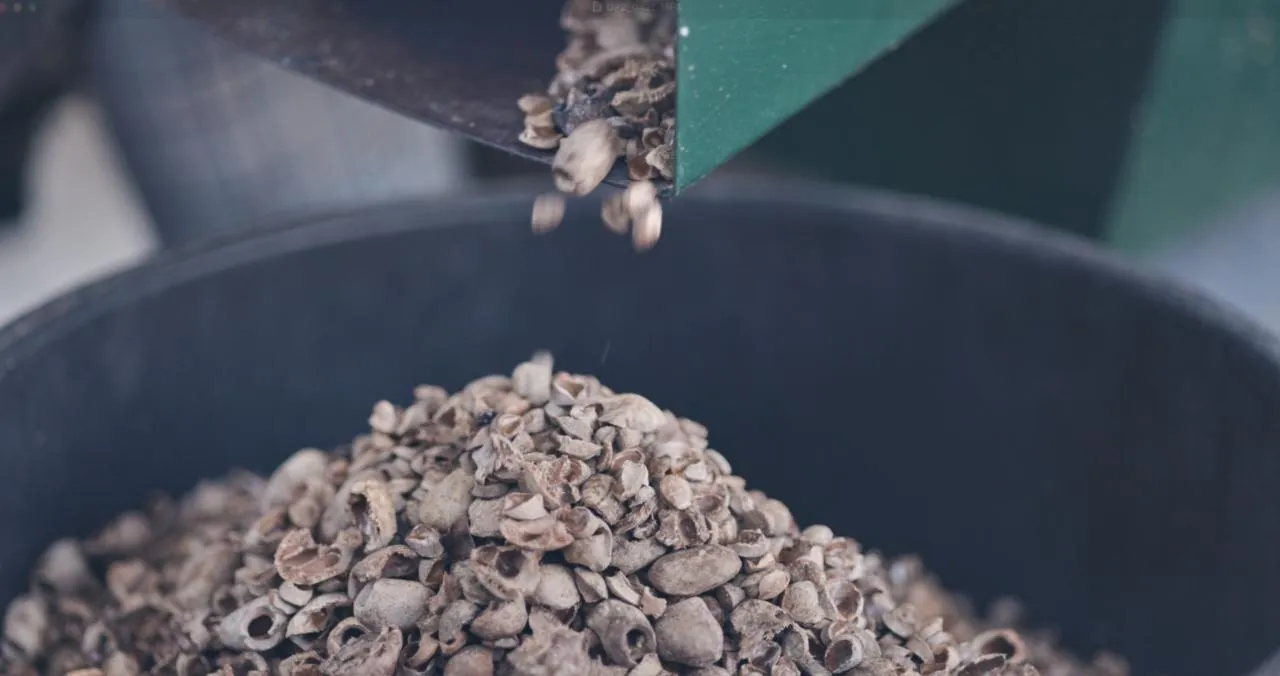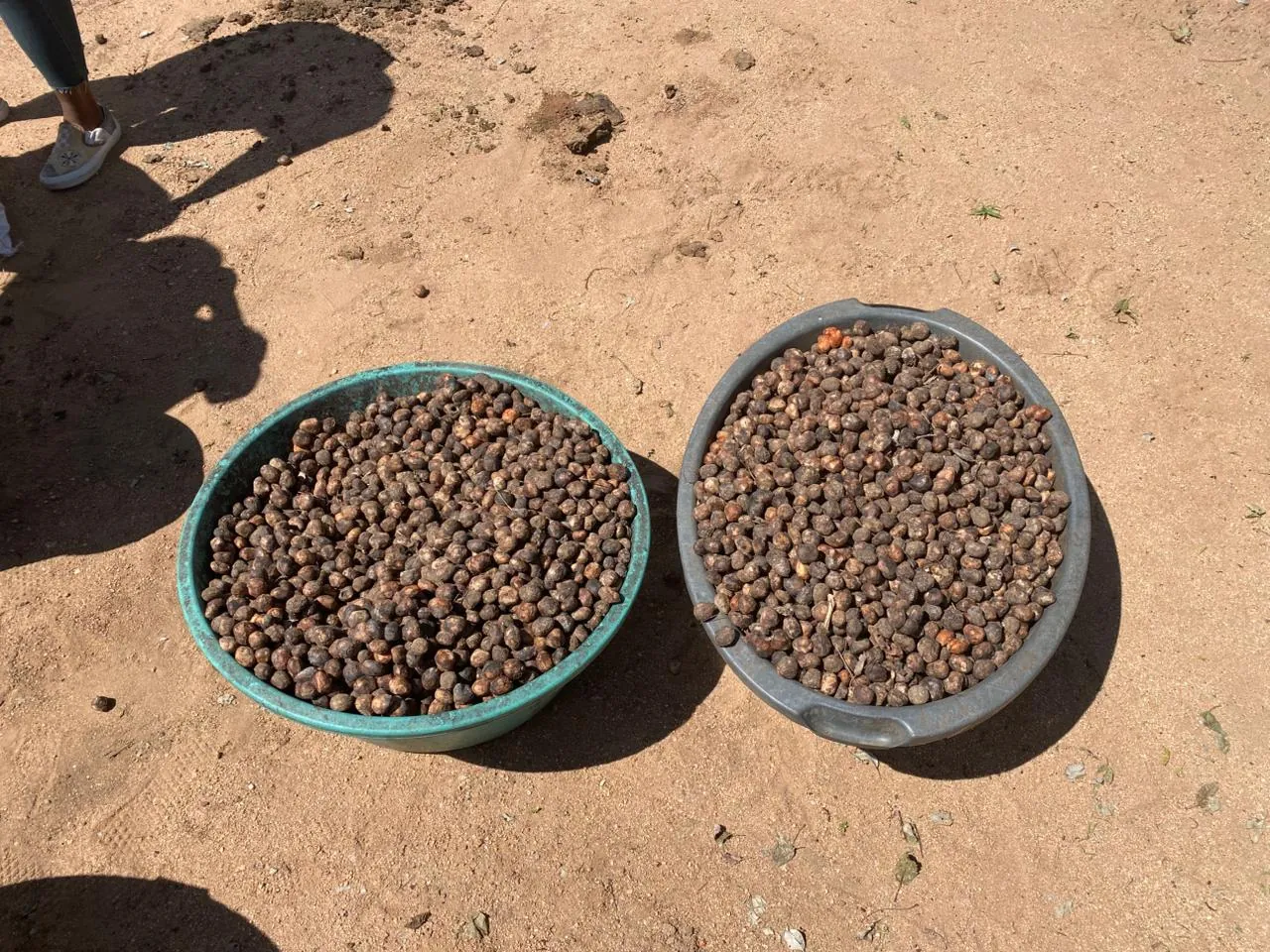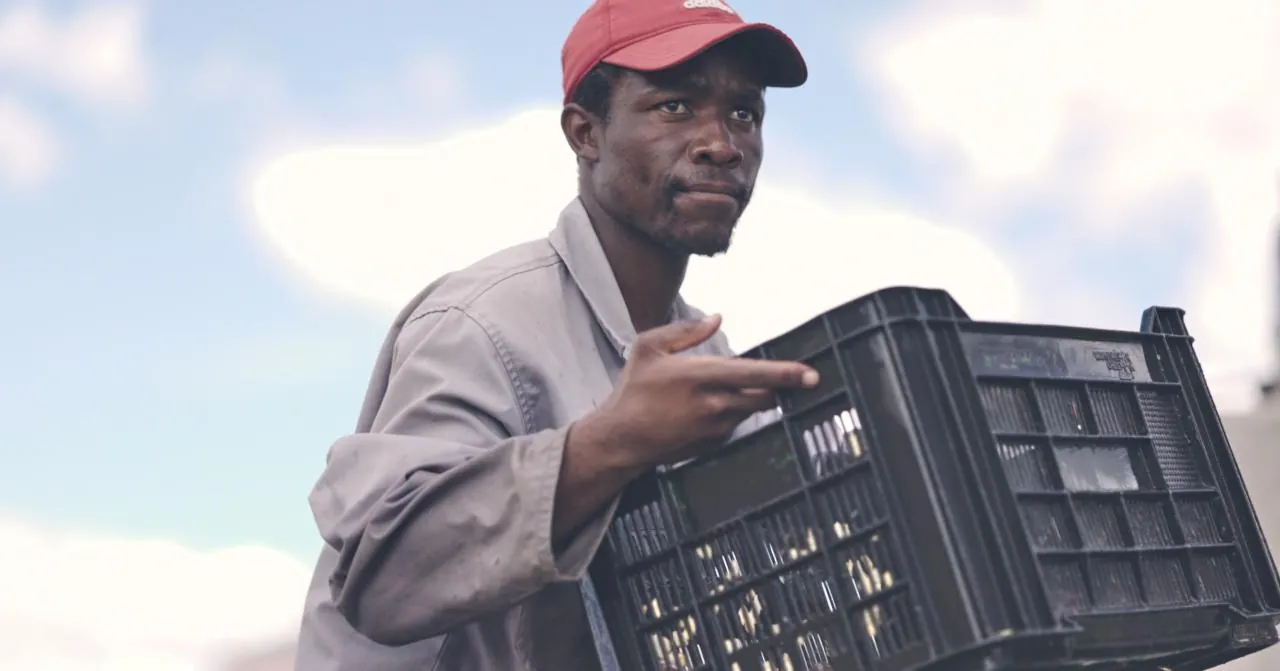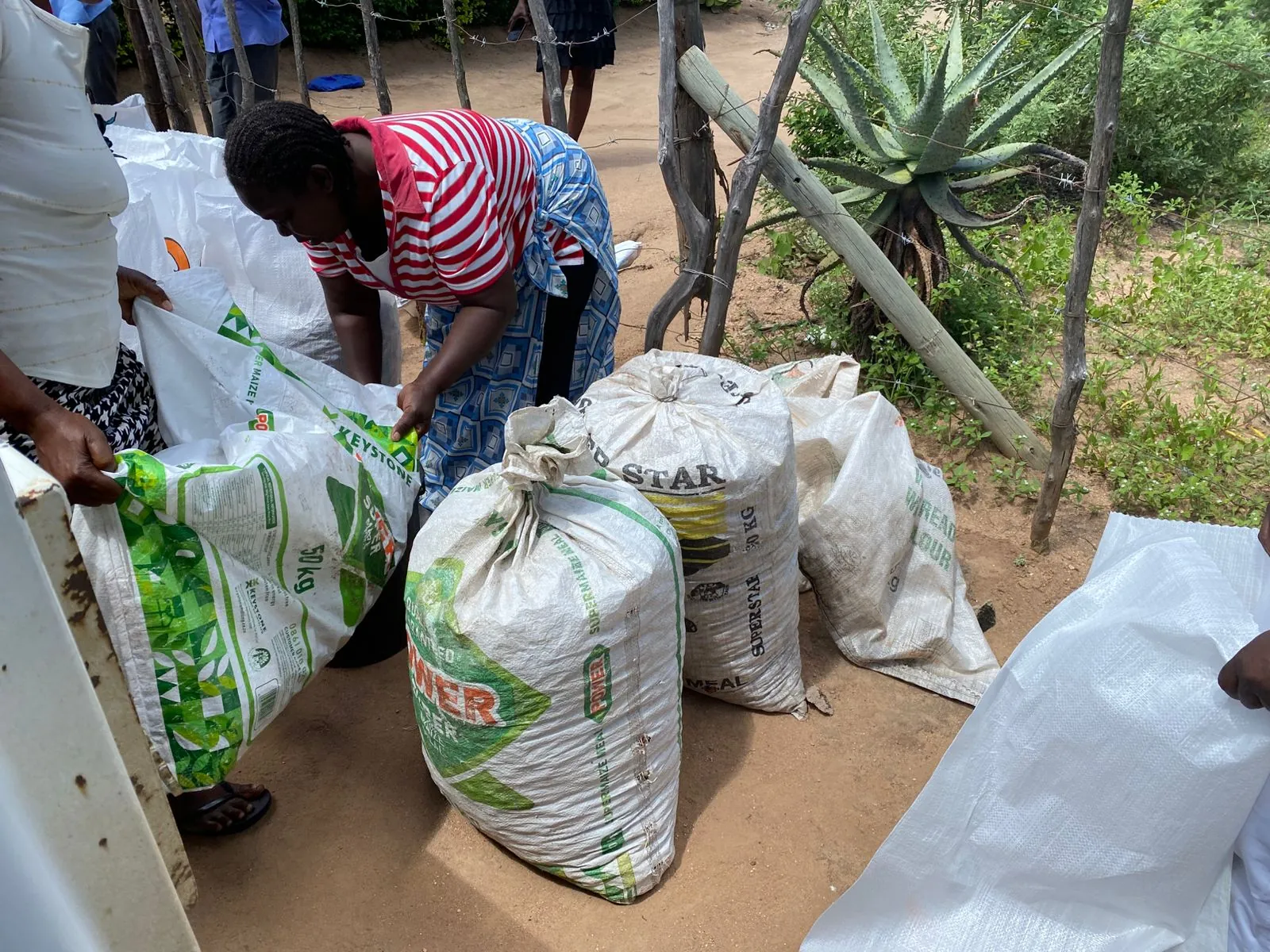
Community nurseries. Household fruit collection. Micro-enterprise oil processing. Global offtake. The closed loop that makes a forty-year promise make sense.
The Shangaan people have lived alongside the marula for generations. The fruit is fermented at the end of summer. The kernel is crushed for oil. The tree is called nkanyi. It is a presence in weddings, in rituals, in the seasonal rhythm of the homestead.
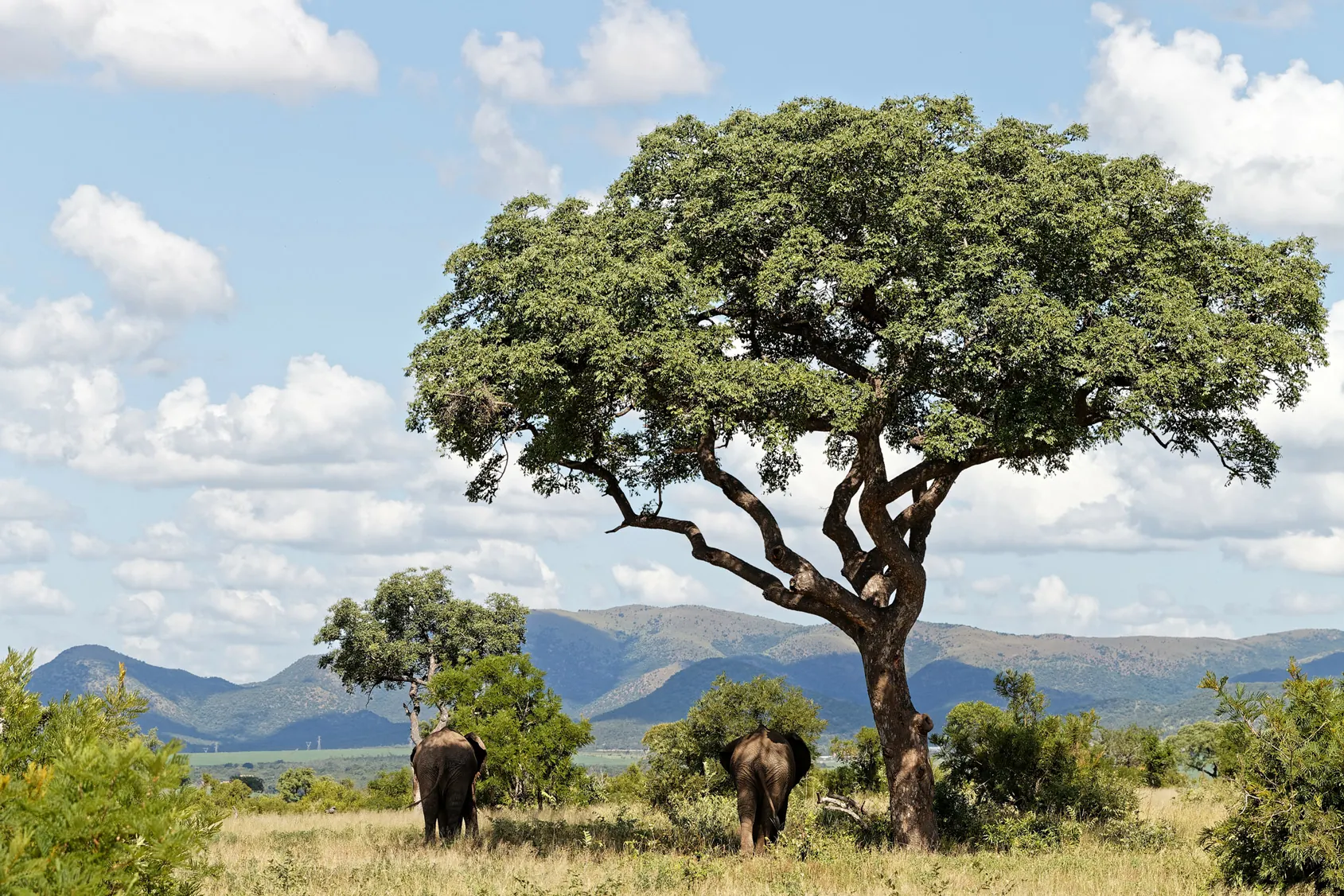
A marula tree reaches over fifty feet at maturity. It starts producing fruit at seven to ten years old and keeps fruiting, annually, into its hundredth year and beyond. A single mature tree drops between five hundred and three thousand kilograms of fruit in a good season — from January through March across most of the Lowveld, stretching into December–May depending on rainfall and altitude.
What the project does is take that existing cultural and economic relationship and connect it — at the ends — to two things it has never been connected to before: a carbon accounting system that pays for the tree standing, and a global skincare market that pays for the oil in the kernel.
Neither connection replaces the local use of the marula. Both extend it.
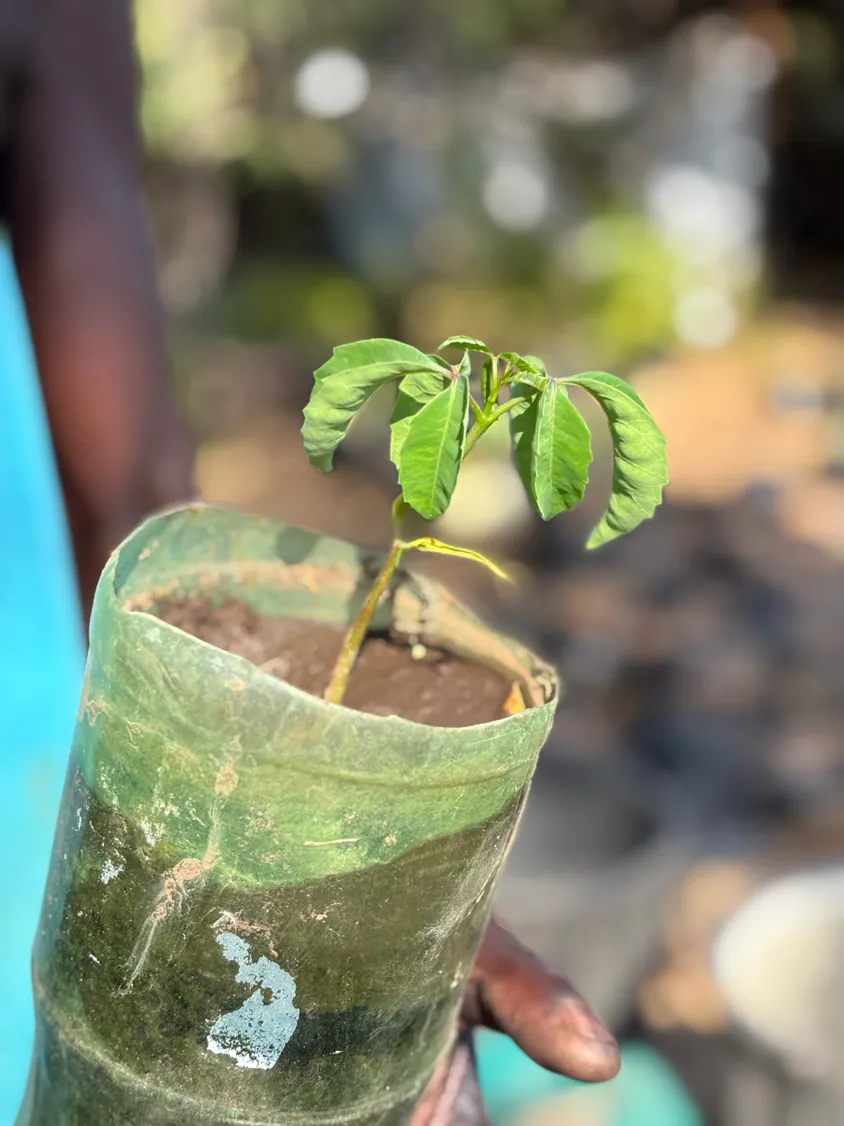
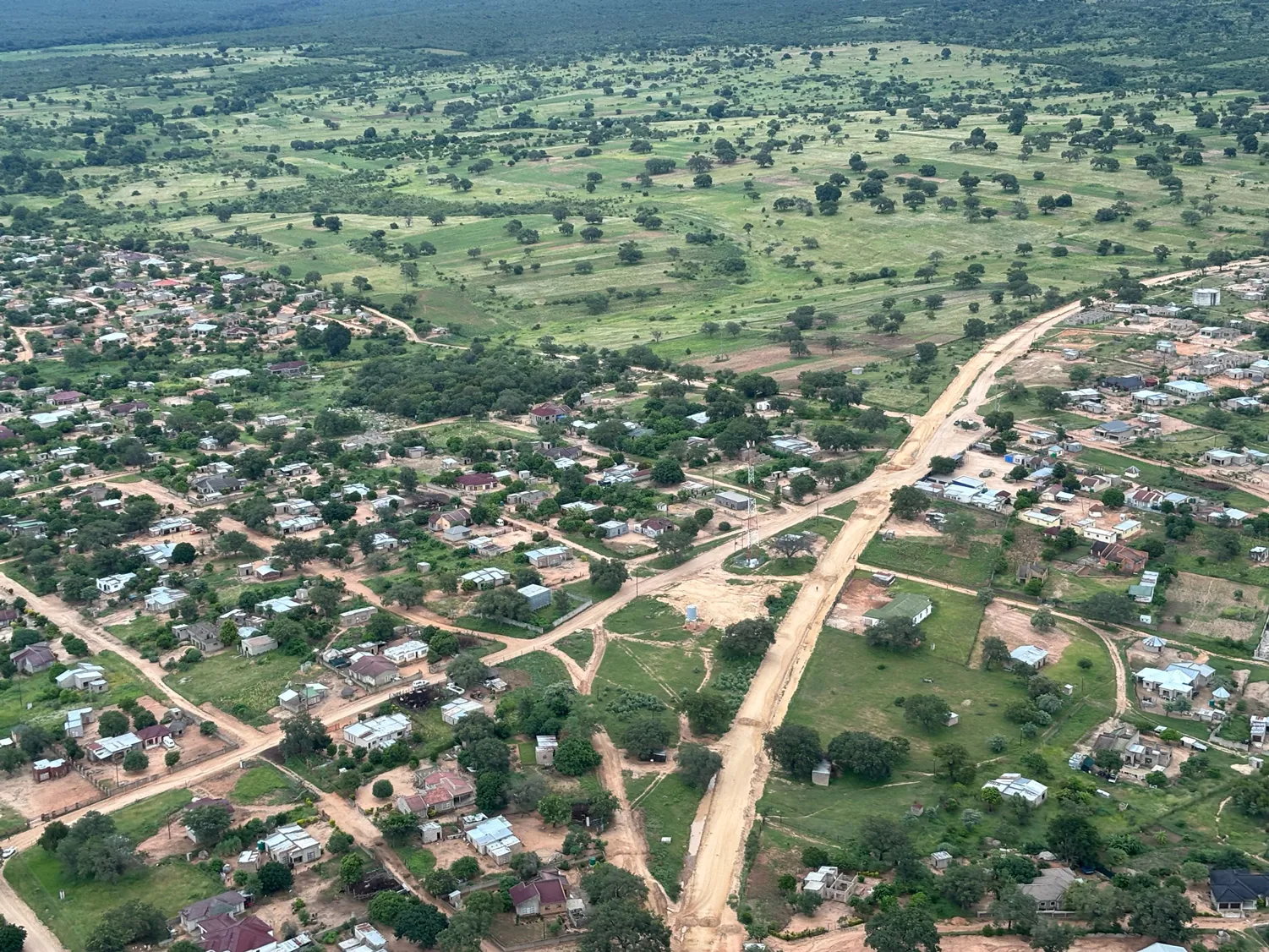
The value chain is four stages, each of them run at the community level. Nothing in this loop is outsourced to a distant contractor. The people who grow the tree are the people who harvest the fruit are the people who process the oil are the people who hold the long-term stake in the landscape.
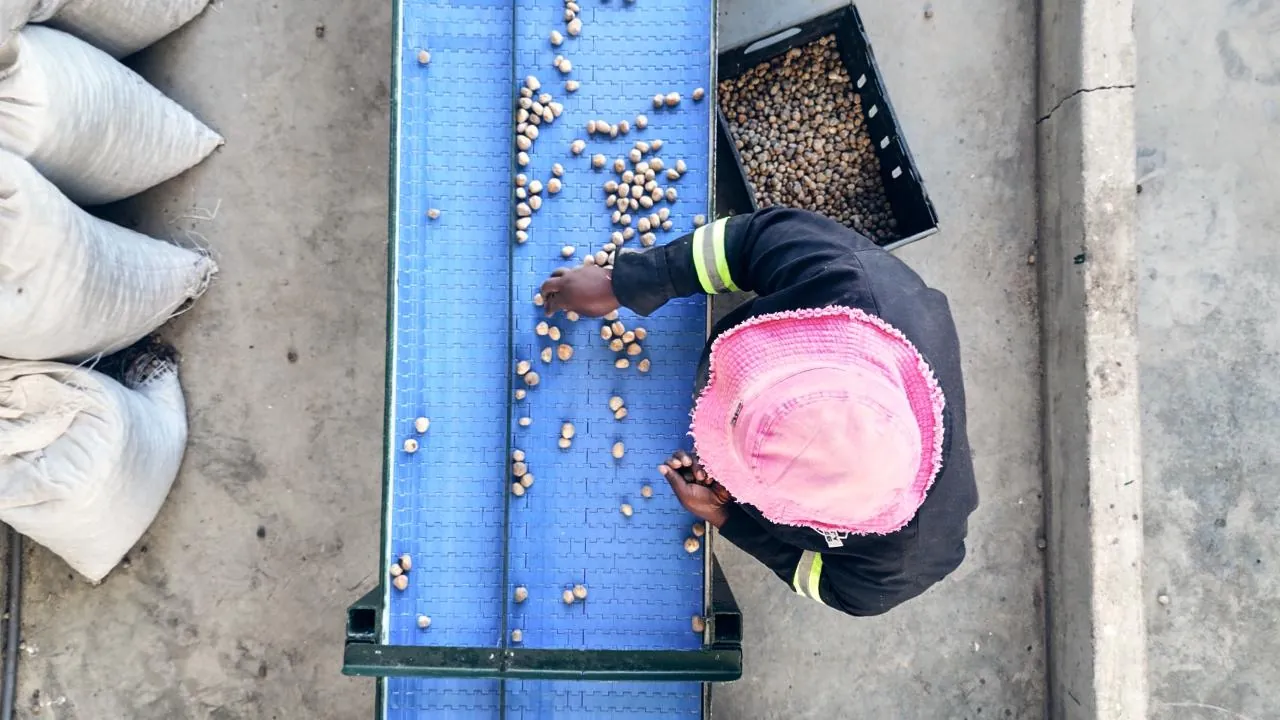
February to April 2026. The first full marula cycle — from fruit-fall to the processor's scale.
Harvested by custodians across the landscape. Aggregated at village weighpoints. Delivered in custodian-tagged bags to our global offtake partners. The revenue model moved from plan to practice in a single cycle.
Proof, not projection. Everything on this page is measured and real. When the numbers grow, the page grows with them.
The 2026 harvest is the project's first proof point. Not a pilot — a live run of the full value chain, from household collection through to kernel aggregation, weighing, payment, and handover to processing.
The benefit-sharing architecture is designed so that the household is the primary beneficiary of its own fruit, the community is the primary beneficiary of the shared processing infrastructure, and the landscape is the primary beneficiary of the long-term carbon revenue. The three tiers are not competitive — each is funded from a different point in the value chain.
The difference between a community enterprise and a charitable pilot is whether there is a buyer waiting at the end of the supply chain. The project is building its offtake book before the trees reach full fruiting capacity — not afterwards. Forward agreements are how we underwrite the household income that makes the carbon permanent.
Certified organic. Fair-trade. Cold-pressed. Registered under South Africa's Bioprospecting, Access and Benefit-Sharing regulatory framework. This is the premium end of the market where provenance is not a marketing asset — it is a price input.
Carbon finance makes the first tree viable. Marula oil makes the fortieth tree unavoidable. Long after the crediting period closes, the household that has been harvesting oil for thirty years has no reason to cut the tree down — and every reason to plant the next one. This is what permanence looks like when it is not enforced at gunpoint.
We use cookies for anonymized analytics so we can improve this site. See our privacy policy.